
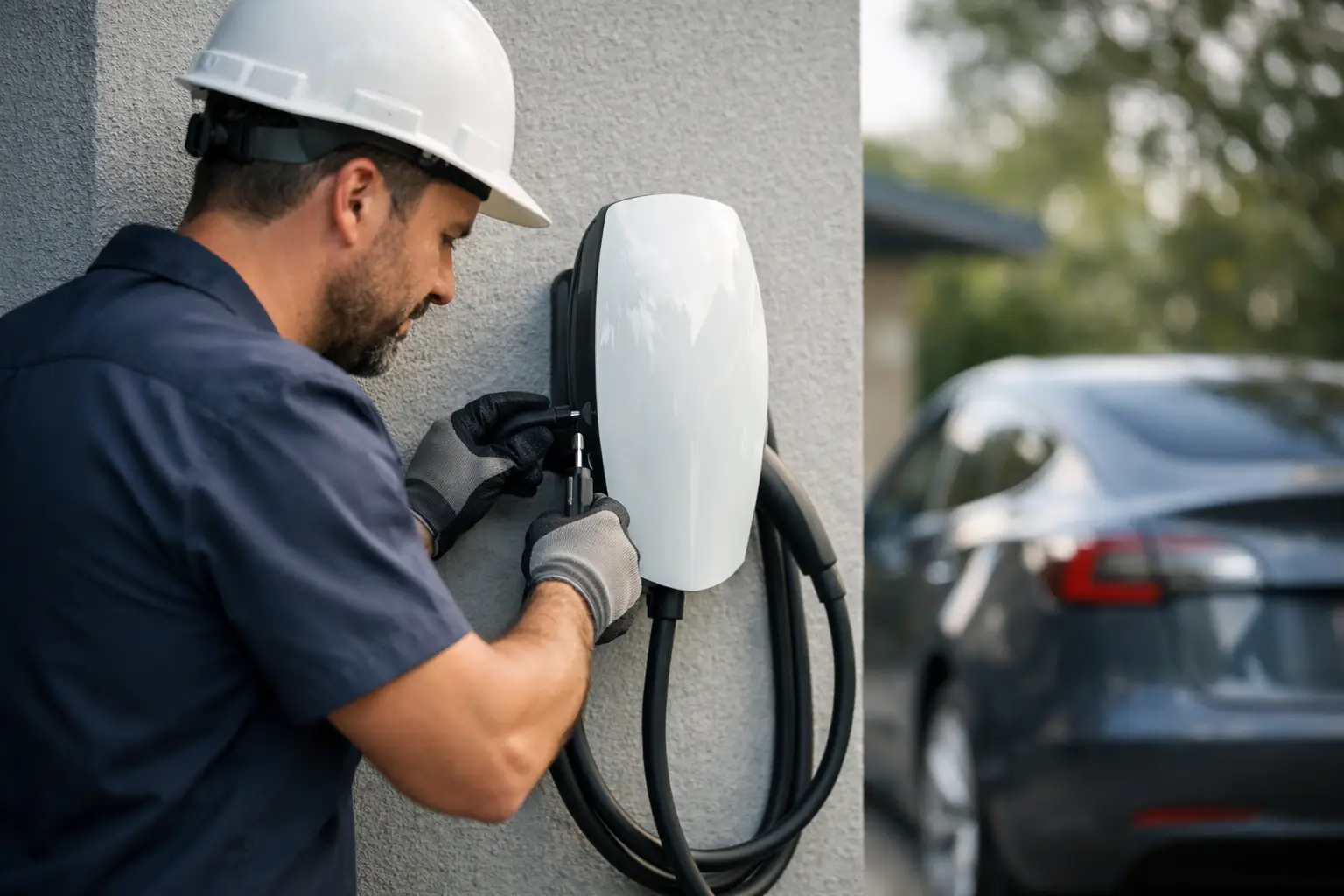
A Tesla Wall Connector can add convenient overnight charging to your garage, but it is not a simple plug-and-play upgrade. Can an electrician install a Tesla Wall Connector? Yes. A licensed electrician is the right professional for the job, provided they understand EV charging equipment, follow the manufacturer’s installation requirements, and verify that your home’s electrical system can support the added load.
The goal is more than getting the charger powered on. A proper installation should give you reliable charging, protect your panel from overload, meet local code requirements, and leave the work clean and ready for inspection when a permit is required.
Can an electrician install a Tesla Wall Connector safely?
Yes, and a qualified electrician can handle the full scope of the installation. That includes evaluating the electrical panel, planning the circuit route, installing the correct breaker and wiring, mounting the Wall Connector, completing setup, and testing the unit under load.
Tesla Wall Connectors are hardwired EV charging units. Unlike a portable charging cord that plugs into a standard outlet, they need a dedicated circuit and permanent electrical connections. This is why homeowners should not treat the project like a standard outlet replacement or rely on an extension cord, an adapter, or a shared appliance circuit.
Not every electrical installation is identical. A newer home with an open panel space and a garage beside the service panel may be straightforward. An older home, a detached garage, a long run to the driveway, or a fully loaded panel can require more planning and a higher project cost. A dependable electrician explains those differences before work begins rather than discovering them after the installation is underway.
What a professional installer checks first
Before selecting a breaker size or mounting location, the electrician should inspect the existing electrical system. This early assessment prevents the most common problem with EV charging projects: adding a major continuous load to a panel that does not have enough available capacity.
A professional will review the panel’s service rating, available breaker spaces, main breaker size, and the home’s current electrical demand. Central air conditioning, electric water heating, pool equipment, electric ranges, workshops, and other high-use equipment all matter. The electrician performs a load calculation to determine whether the existing service can safely support the planned charging rate.
They will also consider the Wall Connector model and the charging level you want. Tesla Wall Connectors can be configured for different output levels. In many homes, a 60-amp circuit supports charging at up to 48 amps, because EV charging is treated as a continuous load. However, the proper circuit size and output setting depend on the equipment instructions, wiring conditions, panel capacity, and applicable code.
The route from the electrical panel to the charger matters as well. A short run through an unfinished garage is generally less involved than a run through finished walls, an attic, underground conduit, or a detached structure. The installer should account for conductor length, conduit requirements, weather exposure, wall construction, and the need to protect wiring from physical damage.
When a panel upgrade may be needed
A Tesla Wall Connector does not automatically mean you need a panel upgrade. Many homes have the electrical capacity for a dedicated EV circuit without major changes. Still, an upgrade may be the correct solution if the service is undersized, the panel is already at capacity, the equipment is outdated, or the load calculation shows insufficient room for the charger.
There are also cases where a homeowner can avoid a full upgrade by selecting a lower charging setting. That can be a practical choice for drivers with shorter daily commutes or vehicles that remain parked overnight. It may take longer to recharge, but it can reduce the electrical work required.
The right answer depends on how you use the vehicle and what the home can support. A contractor should not push a larger upgrade if a lower-output configuration safely meets your needs. On the other hand, choosing the cheapest possible approach is not a good trade if it leaves the system overloaded or limits plans for future electrical additions.
Permits and code compliance are part of the job
In Southern California, EV charger installations commonly require a permit and inspection through the local authority having jurisdiction. Requirements can vary by city, community, and property type, so an electrician should confirm the applicable process before starting work.
Permitting is not unnecessary paperwork. It provides an independent review of key safety details, including circuit protection, conductor sizing, grounding, working clearances, mounting, and load capacity. This can also be valuable when selling a home, filing an insurance claim, or documenting upgrades for a property manager or future owner.
A professional installation should follow the current electrical code, local amendments, and the Tesla Wall Connector installation instructions. Those instructions address mounting height, wire termination, breaker selection, communication setup, and other equipment-specific requirements. If a property has a homeowners association or a shared parking arrangement, there may also be separate approval steps to address before scheduling the work.
Choosing the right location for the Wall Connector
The best location is usually the one that makes daily charging easy without creating an awkward cable path. For many homeowners, that means placing the unit near the vehicle’s charge port while keeping the cable off walking paths and out of the way of garage doors, storage, and vehicles.
The electrician will need a suitable mounting surface and a safe path for the electrical circuit. Indoor garage installation is common, but Wall Connectors can also be installed outdoors when the equipment and installation conditions are appropriate. Outdoor work may require weather-rated materials, protective conduit, and additional planning for vehicle access and drainage.
Think ahead before choosing the final spot. If you may park a second EV in the garage, remodel the space, add solar or battery storage, or relocate vehicles in the future, the charger location and circuit design should support those plans where practical.
What the installation process typically looks like
Once the site is evaluated and the scope is clear, the work usually follows a direct sequence. The electrician secures any required permit, installs a dedicated circuit from the panel to the charger location, mounts and hardwires the Tesla Wall Connector, and verifies that all connections are properly torqued and protected.
After power is restored, the unit is configured for the approved circuit rating and tested. The installer should confirm that the Wall Connector powers up correctly, begins charging as expected, and does not show fault indicators. Tesla app and Wi-Fi setup may also be completed so you can monitor charging and manage available features.
The final result should look orderly. Exposed conduit should be securely supported, penetrations should be properly sealed, panel labeling should be clear, and the work area should be left clean. Good electrical work is functional, but it should also be easy for the next technician or inspector to understand.
Questions to ask before hiring an electrician
Start by confirming that the contractor is licensed and insured and has experience with EV charger installations. Ask whether they will perform a load calculation, handle permit requirements where needed, and provide a clear written scope of work. You should also know whether the quoted price includes the circuit, breaker, wiring route, charger mounting, permitting coordination, and any anticipated panel work.
Be cautious of a price offered without seeing the panel, charger location, or route between them. Flat-rate pricing is helpful when it is based on an actual assessment and clearly explains what is included. If unknown conditions are possible, such as concealed wiring obstacles or an outdated panel, the contractor should explain how those situations will be handled before the project starts.
For homeowners in Menifee, Murrieta, Temecula, Canyon Lake, and nearby communities, RB Electrical Service can evaluate the charging location, panel capacity, and installation requirements before moving forward. That gives you a clear path to home charging without guesswork or surprise electrical issues.
A Tesla Wall Connector is a long-term addition to your home, so choose an electrician who treats it that way. The right installation delivers convenient daily charging while keeping your electrical system safe, code-compliant, and prepared for the road ahead.