
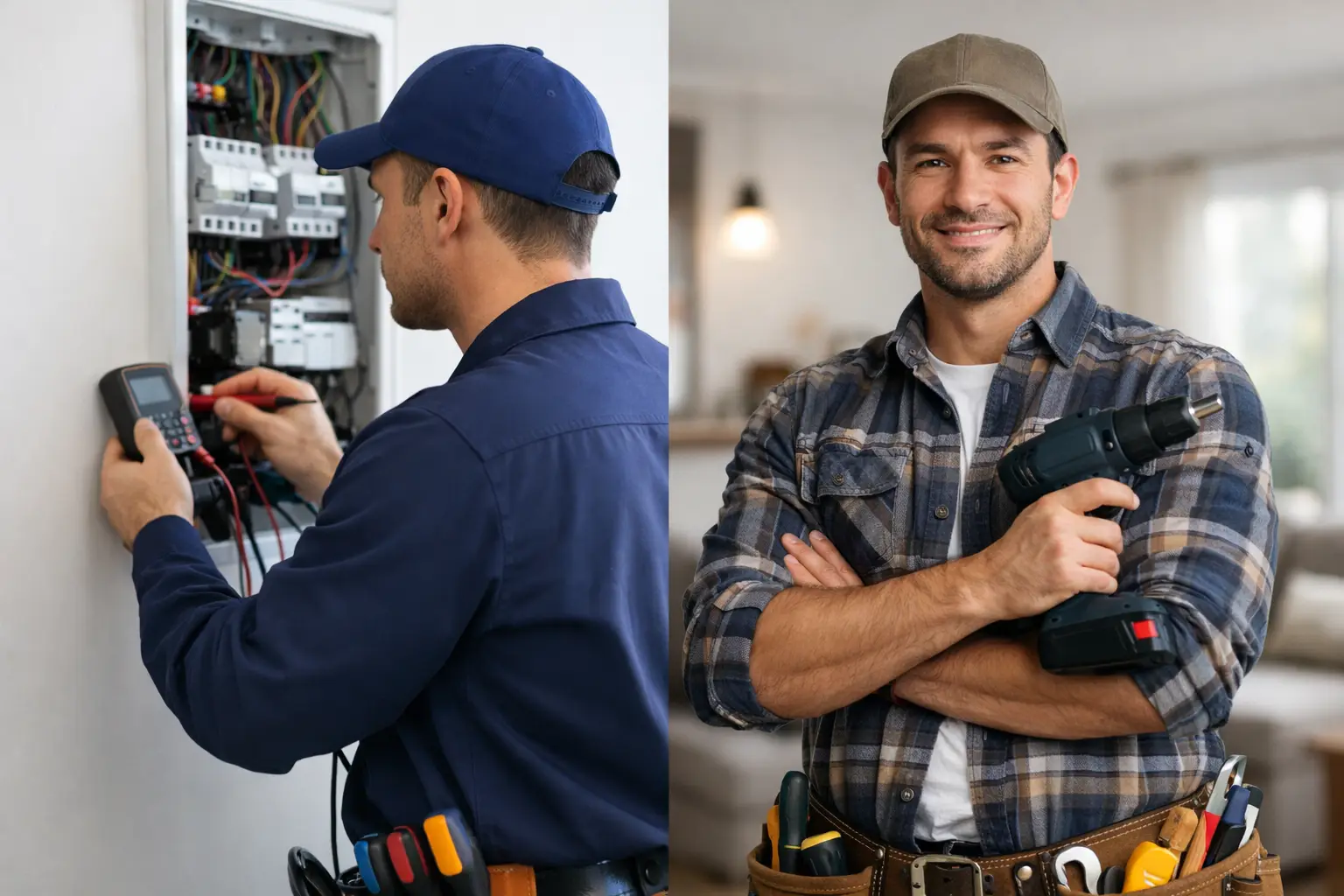
A light switch that feels warm, a breaker that keeps tripping, or a new EV charger project can quickly raise the same question: residential electrician vs handyman, who should you call? The answer is not always complicated, but it does matter. Electrical work affects your family’s safety, your home’s code compliance, and the reliability of the systems you use every day.
A skilled handyman can be a practical choice for many household tasks. But when the work involves wiring, circuits, electrical panels, permits, or a recurring electrical problem, a licensed electrical contractor is the right call. Knowing where that line falls can help you avoid paying twice for the same job or putting a larger issue behind a wall.
Residential Electrician vs Handyman: The Key Difference
The main difference is training, licensing, and scope of work. A residential electrician is trained to install, diagnose, repair, and upgrade electrical systems. They understand load calculations, circuit protection, grounding, electrical code requirements, and how one problem can affect the rest of a home’s system.
A handyman typically handles general maintenance and smaller repair projects. Their experience can vary widely. Some have years of practical construction knowledge; others focus on basic household work. That does not make a handyman unqualified for every task, but electrical work requires a more specific level of expertise when the job goes beyond a simple, like-for-like replacement.
In California, contractor licensing requirements also matter. Projects that meet the state’s licensing threshold, including labor and materials, generally require a properly licensed contractor. Electrical work may also require permits and inspections depending on the scope and the local jurisdiction. A licensed electrical contractor can identify those requirements before work begins and complete the project with code compliance in mind.
When a Handyman May Be a Reasonable Choice
For simple, non-electrical household tasks, a handyman can save time and keep a small project moving. If the work does not involve opening electrical boxes, modifying wiring, adding a circuit, or connecting to your home’s electrical system, a handyman may be appropriate.
For example, a handyman may be able to assist with mounting a television, installing shelving near an outlet, replacing a non-electrical fixture cover, or handling general repairs as part of a larger home maintenance visit. The key is that the task stays outside the electrical system itself.
Even a job that looks small can change once the wall is open or an old fixture comes down. Older homes in Menifee, Murrieta, Temecula, and surrounding communities may have outdated wiring methods, overloaded circuits, or previous work that was not completed correctly. When an electrical issue appears, it is better to stop and have it evaluated than to guess at the cause.
When You Need a Residential Electrician
Call a residential electrician when the project involves power, wiring, circuit capacity, safety devices, or a connection to the electrical panel. These jobs are not just about getting something to turn on. They require correct installation, proper testing, and a clear understanding of the load placed on the system.
An electrician should handle work such as:
- Installing new outlets, switches, dimmers, ceiling fans, or lighting that requires new wiring
- Troubleshooting outlets that have stopped working, flicker, spark, or feel warm
- Replacing breakers or diagnosing breakers that trip repeatedly
- Adding dedicated circuits for equipment, garage power, or a home office
- Upgrading an electrical panel, subpanel, meter equipment, or service capacity
- Installing EV chargers, backup generators, surge protection, or whole-home safety upgrades
A licensed electrician is also the right choice for remodels and additions. A kitchen update, garage conversion, room addition, or outdoor living project often changes the electrical demand in a home. The existing panel may not have enough capacity, required GFCI or AFCI protection may need to be added, and new circuits may be necessary to keep the system safe and dependable.
This is where the lowest upfront price can become misleading. A handyman may quote less for a task that seems straightforward, but an incomplete or incorrect electrical installation can lead to failed inspections, damaged equipment, repeated service calls, or a costly correction later. Professional electrical work is about solving the full problem, not only completing the visible part of the job.
Safety and Code Are Not Optional Details
Electrical code can feel like paperwork until it prevents a real problem. Code requirements address practical safety issues, including shock hazards near water, overloaded conductors, proper grounding, secure connections, and protection from arc faults. They also help ensure your home’s electrical system can be serviced safely in the future.
A professional electrician does more than connect wires. They check the condition of the circuit, confirm the correct wire size and breaker rating, test the completed work, and look for related concerns that may affect the installation. That level of review is especially valuable when a home has older wiring, a crowded panel, or a history of tripped breakers.
There are situations that should never wait for a convenient maintenance visit. Contact a qualified electrician promptly if you notice burning odors near an outlet or panel, buzzing sounds, sparks, discoloration, a warm electrical cover, frequent breaker trips, or lights that dim when major loads start. If you believe there is an immediate fire or shock hazard, turn off power only if it is safe to do so and seek urgent help.
Consider the Scope, Not Just the Size of the Job
Homeowners often use job size as the deciding factor. A small electrical job must be safe and code-compliant just like a major panel upgrade. Replacing a single switch may be simple if the box, wiring, grounding, and circuit are all in good condition. But if the switch is failing because of a loose connection or overloaded circuit, the real repair is no longer small.
Ask a few practical questions before choosing who to hire. Does the work involve wires or breakers? Will it require a permit or inspection? Is the existing electrical system known to be in good condition? Could an incorrect installation create a shock, fire, or insurance issue? If the answer to any of these is yes, contact a licensed electrician.
It also helps to think about the purpose of the project. A temporary cosmetic fix may not need the same level of specialized work as an EV charger installation or a backup power system. But anything intended to provide permanent power to your home should be installed by a professional who can stand behind the work.
What to Expect From a Professional Electrical Service Call
A dependable electrical contractor should make the process clear from the start. You should understand what is being evaluated, what the recommended repair or upgrade includes, and how pricing is determined before work moves forward. Clear communication matters because electrical issues are often hidden behind walls, inside panels, or within older components.
At RB Electrical Service, the focus is on practical recommendations, transparent flat-rate pricing, and work completed cleanly and correctly. Whether the need is a recurring breaker issue, a panel modernization, a generator connection, or an EV charger installation, the goal is to give homeowners a clear path forward without surprises.
The best choice is not about assigning every home task to one type of provider. Use a handyman for general maintenance within their scope. Use a licensed residential electrician when your electrical system is involved. That decision protects your home, keeps projects moving, and gives you confidence that the power behind your walls is working the way it should.